If caught early, this condition often resolves on its own, but affected dogs should be given plenty of rest and kept warm. A veterinarian may also recommend pain relief to help keep them comfortable while they recover.
Common Hunting-Related Dog Injuries and What You Can Do
Jan 8, 2026 Health & Safety
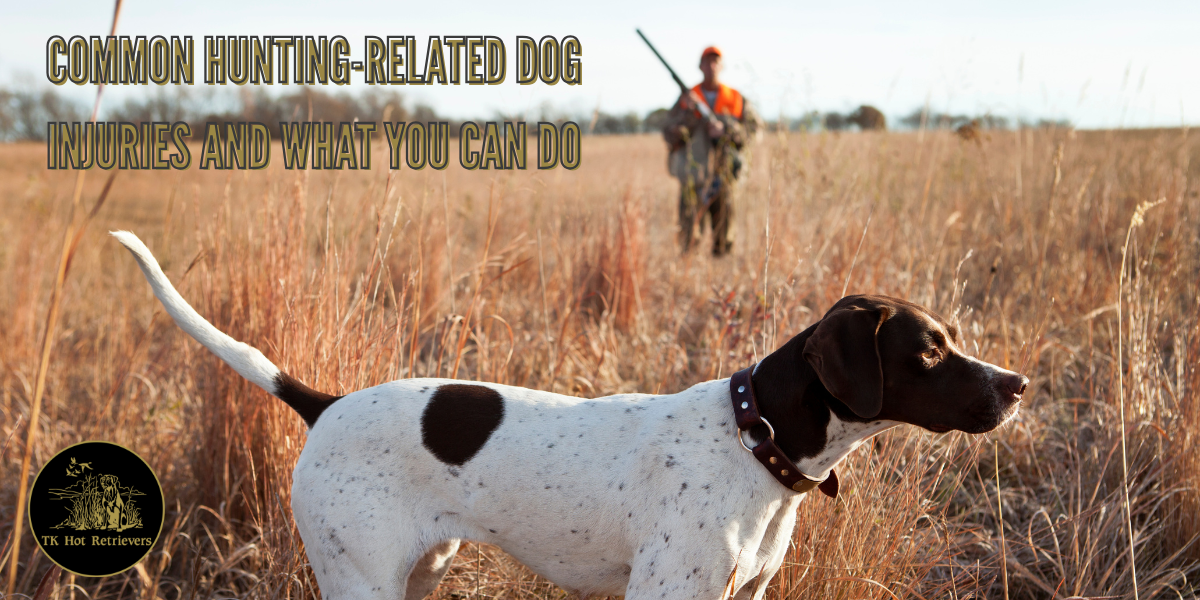
Hunting dogs are one of the bravest dog breeds out there. But being a tough hunting dog comes with its scrapes and bruises. Your four-legged partner can experience a range of injuries in the field. Knowing how to recognise, respond to, and prevent these injuries can make all the difference for your dog’s safety and comfort.
Eye Injuries and Irritations
Eye problems are both common and potentially serious during hunts. Grass seeds, first, and debris can quickly embed in the eye. What may start as a minor irritation can develop into a corneal ulcer in a short span of time.
Watch out for:
- Pawing at the eye or holding it closed.
- Redness or discharge.
- Visible plant material that is not easily removable.
If it’s a minor injury, clean around the eye and monitor their comfort. If it’s severe, seek veterinary care immediately.
Lacerations and Bleeding Wounds
Cuts and scrapes are perhaps the most familiar injuries for hunting dogs. These can result from barbed wire, sharp branches, or even interactions with wildlife. For small cuts, clean the wound, bandage it, and keep it protected. Any major bleeding, like deep punctures or excessive blood, will require professional veterinary care as soon as possible.
Packing a good canine field medical kit is one of the best ways to stay prepared.
Tail Injuries
Tail injuries, especially “tail tip” wounds, are common in dogs that work in dense undergrowth areas. Gundog breeds often slam the end of their tail into shrubs, creating chronic wounds that don’t heal well without care.
Signs of Injury:
- Excessive licking or chewing at the tail.
- Ongoing bleeding, swelling, or infection
Hip Dysplasia and Osteoarthritis
Even though these issues don’t usually come from just one day in the field, the wear and tear of repeated hunting trips can bring joint problems like hip dysplasia and osteoarthritis, especially in larger breeds like Labradors and spaniels.
Signs of Injury:
- Bunny-hopping gait.
- Difficulty rising.
- Exercise intolerance.